
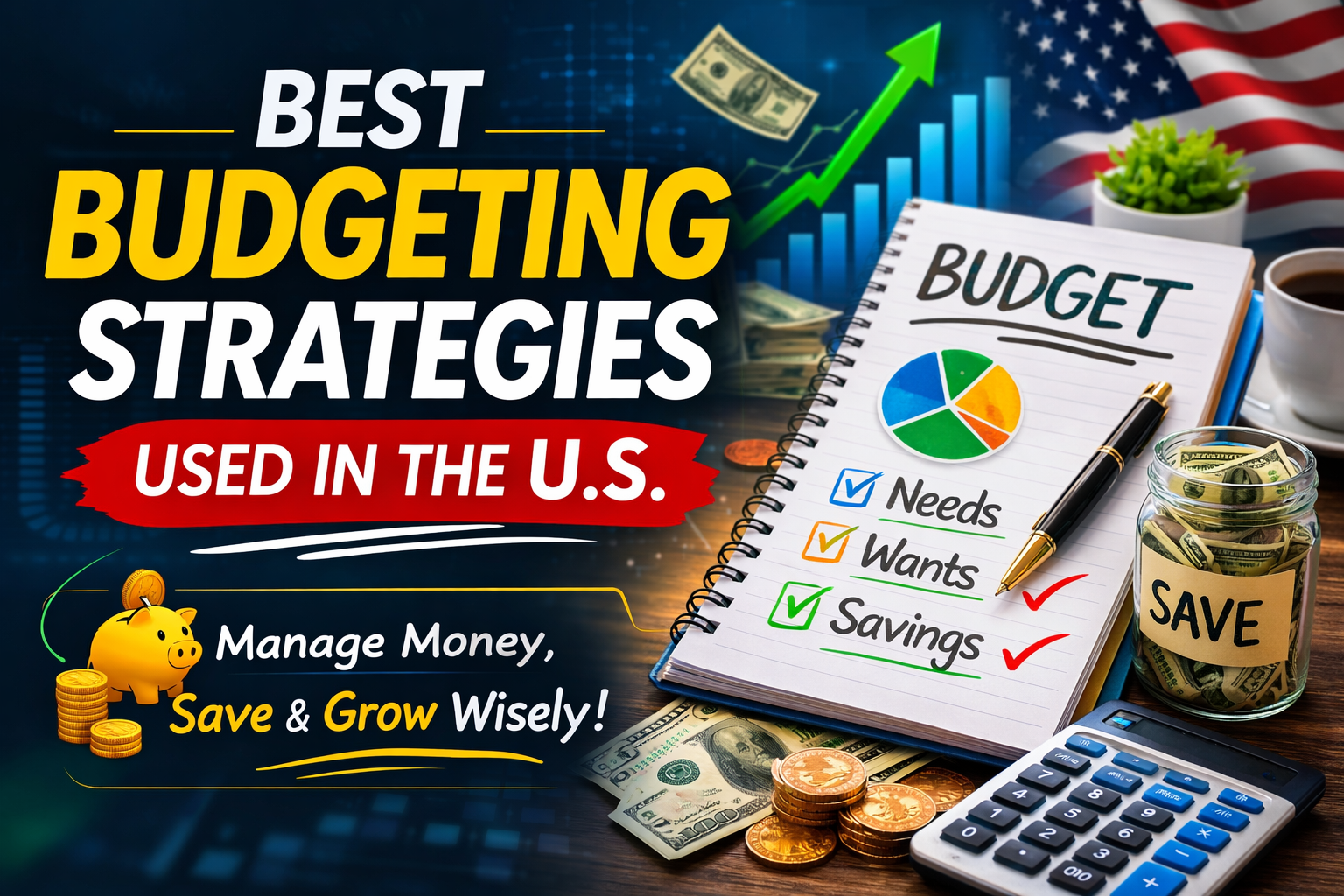
Discover the best budgeting strategies used in the U.S. to manage money effectively. Learn practical budgeting strategies like the 50/30/20 rule, zero-based budgeting, and envelope budgeting to improve financial stability.
Best Budgeting Strategies Used in the U.S.
Managing money effectively is a crucial skill for financial stability. In the United States, individuals and families rely on various budgeting strategies to control spending, save for the future, and avoid debt. These budgeting strategies help people understand where their money goes and allow them to make smarter financial decisions.
Whether you are trying to save more, reduce debt, or simply gain better control over your finances, learning proven budgeting strategies can make a significant difference. In this article, we will explore the most popular budgeting strategies used in the U.S. and explain how they work.
Why Budgeting Strategies Are Important
Before exploring specific budgeting strategies, it is important to understand why budgeting matters. Budgeting allows individuals to track their income and expenses while planning for future financial goals.
Effective budgeting strategies help people:
- Avoid unnecessary debt
- Save for emergencies
- Plan for retirement
- Control impulsive spending
- Achieve long-term financial goals
According to financial education resources from Consumer Financial Protection Bureau, creating and following a budget is one of the most effective ways to maintain financial health.
You can learn more about basic budgeting concepts here:
https://www.consumerfinance.gov/consumer-tools/budgeting/
The Most Popular Budgeting Strategies in the U.S.
There are several budgeting strategies that Americans commonly use to manage their money. Each strategy offers a different approach depending on personal preferences and financial goals.
1. The 50/30/20 Budgeting Strategy
One of the most widely used budgeting strategies in the U.S. is the 50/30/20 rule. This budgeting method divides income into three categories.
- 50% for Needs – housing, groceries, utilities, insurance
- 30% for Wants – entertainment, travel, dining out
- 20% for Savings and Debt Repayment
This simple budgeting strategy is popular because it is easy to follow and does not require complex calculations. It helps people maintain balance between essential expenses and financial goals.
For a detailed explanation, visit:
https://www.investopedia.com/ask/answers/022916/what-502030-budget-rule.asp
2. Zero-Based Budgeting Strategy
Another effective method among American budgeting strategies is zero-based budgeting. In this system, every dollar of income is assigned a specific purpose.
The goal of this budgeting strategy is simple:
Income – Expenses = $0
This does not mean you spend everything. Instead, you allocate money to savings, investments, and expenses until every dollar is accounted for.
Many personal finance experts recommend zero-based budgeting because it provides a detailed understanding of spending habits.
More information about zero-based budgeting can be found at:
https://www.nerdwallet.com/article/finance/zero-based-budgeting
3. Envelope Budgeting Strategy
The envelope budgeting strategy is another popular approach used in the U.S. This traditional budgeting strategy involves dividing cash into physical envelopes for different spending categories.
For example:
- Grocery envelope
- Transportation envelope
- Entertainment envelope
Once the money in an envelope is gone, spending stops for that category. This budgeting strategy helps prevent overspending and encourages discipline.
Although many people now use digital tools, the envelope budgeting strategy remains effective for individuals who prefer visual control over spending.
4. Pay Yourself First Budgeting Strategy
Among the most powerful budgeting strategies is the pay yourself first method. Instead of saving money after paying bills, this budgeting strategy prioritizes savings immediately after receiving income.
For example:
- 10–20% of income goes directly into savings or investments
- Remaining income is used for expenses
This budgeting strategy helps build wealth over time because savings become a priority rather than an afterthought.
Financial experts often recommend automating savings accounts or retirement contributions to follow this budgeting strategy effectively.
5. Digital Budgeting Strategy Using Apps
Technology has introduced new budgeting strategies that rely on mobile applications and financial tools. Many Americans now track expenses using budgeting apps.
Popular budgeting tools include:
- Mint
- YNAB
- PocketGuard
These apps automatically categorize spending, track financial goals, and provide insights into personal finances.
Digital budgeting strategies are becoming increasingly popular because they simplify financial management and offer real-time tracking.
Choosing the Right Budgeting Strategy
Not every budgeting method works for everyone. The best budgeting strategies depend on lifestyle, income level, and financial goals.
For example:
- Beginners may prefer the 50/30/20 budgeting strategy because of its simplicity.
- People trying to eliminate debt may benefit from zero-based budgeting strategies.
- Individuals who struggle with overspending may prefer the envelope budgeting strategy.
The key to success is consistency. Even the best budgeting strategies will not work unless they are followed regularly.
Tips to Make Budgeting Strategies Work
Regardless of which budgeting strategies you choose, the following tips can help improve results:
Track Every Expense
Tracking spending is the foundation of all budgeting strategies. Without knowing where your money goes, it becomes difficult to control finances.
Set Realistic Financial Goals
Successful budgeting strategies require clear goals such as saving for a house, building an emergency fund, or reducing debt.
Review Your Budget Monthly
Financial situations change over time. Reviewing and adjusting budgeting strategies each month ensures that your budget stays relevant.
Build an Emergency Fund
Many American budgeting strategies emphasize emergency savings. Experts recommend saving three to six months of expenses to handle unexpected financial challenges.
Conclusion
Effective budgeting strategies play a crucial role in maintaining financial stability. In the United States, methods such as the 50/30/20 budgeting strategy, zero-based budgeting, and the envelope budgeting strategy are widely used to manage income and expenses.
By adopting the right budgeting strategies, individuals can gain better control over their finances, reduce stress related to money, and work toward long-term financial security.
No matter which approach you choose, the most important aspect of successful budgeting strategies is consistency and discipline. Over time, small improvements in budgeting habits can lead to significant financial growth and stability.
Master Your Money : Stop wondering where your paycheck went. Learn the most effective budgeting methods, from the 50/30/20 rule to zero-based budgeting, and take control of your financial future today
