
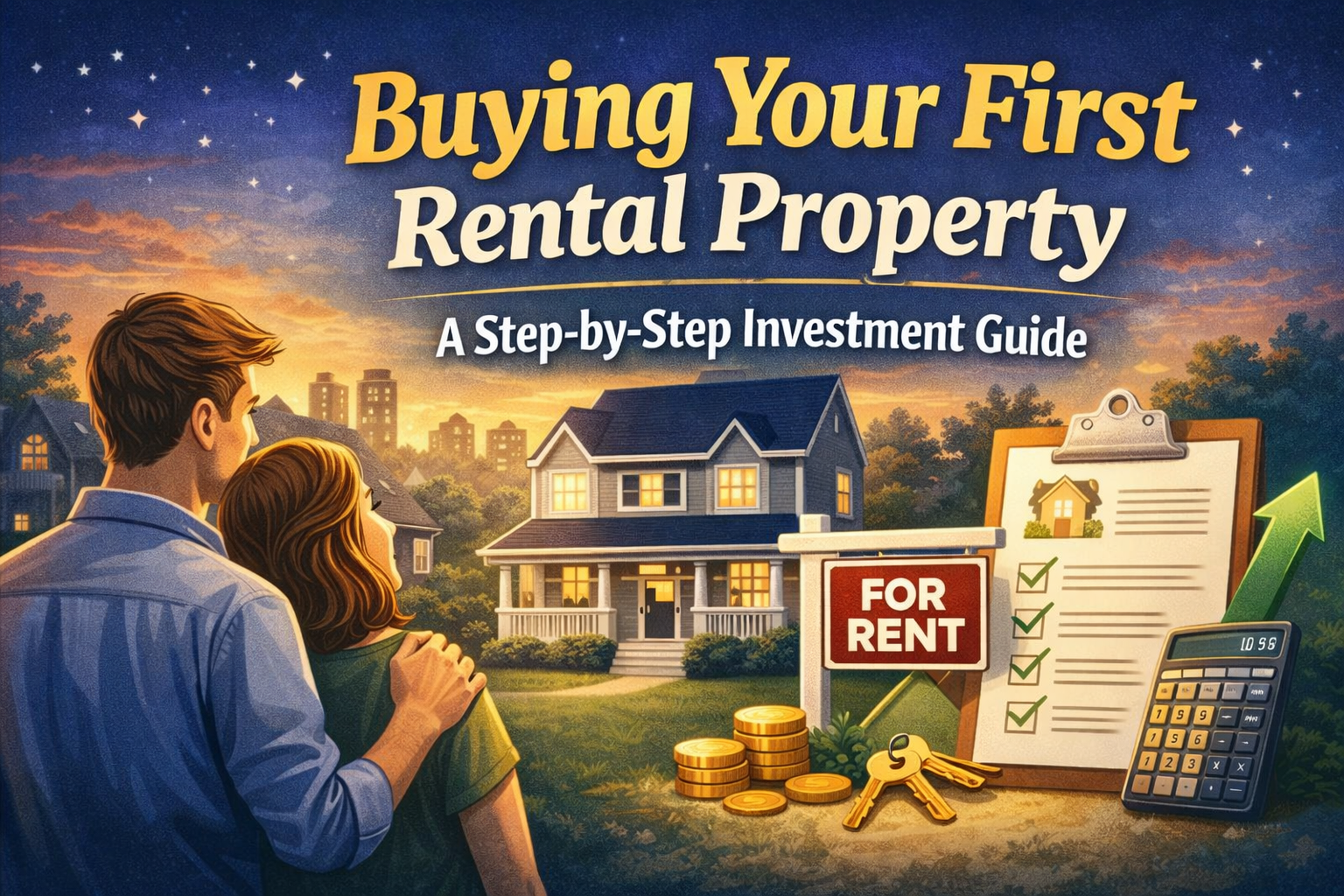
Real estate is a proven wealth-builder. Learn how to analyze markets, secure financing, and manage tenants to create a reliable stream of passive rental income.
Intro
Real estate has long been considered one of the most reliable ways to build long-term wealth. Among the many property investment options, rental properties are especially attractive because they can generate consistent monthly income while the property value grows over time.
However, buying your first rental property can feel overwhelming. There are many factors to consider such as financing, property selection, location, tenant management, and long-term returns. Without proper planning, beginners often make costly mistakes.
This step-by-step investment guide will help you understand how to buy your first rental property, what to look for, and how to build a profitable real estate investment.
Why Invest in Rental Property?
Before diving into the process, it’s important to understand why rental property investment is so popular.
1. Passive Income Potential
Rental properties generate monthly rental income. Once the property is rented, you receive consistent cash flow that can cover mortgage payments, maintenance, and still leave profit.
2. Property Value Appreciation
Real estate typically increases in value over time. This means your property may become significantly more valuable in the future.
3. Tax Benefits
Many countries offer tax advantages for real estate investors. These may include deductions for mortgage interest, property taxes, and maintenance costs.
4. Inflation Protection
When inflation rises, rent prices and property values often rise as well. This helps protect your investment.
Step 1: Understand Your Financial Position
Before purchasing your first rental property, you must clearly understand your financial situation.
Start by reviewing:
- Your credit score
- Available savings for a down payment
- Current debts and liabilities
- Monthly income stability
Most lenders require a 20%–25% down payment for investment properties. Unlike primary homes, rental properties usually have stricter loan requirements.
You should also keep additional funds aside for:
- Property repairs
- Vacancy periods
- Property management costs
- Unexpected expenses
A good rule is to keep 3–6 months of expenses in reserve.
Step 2: Choose the Right Location
Location is one of the most critical factors in rental property success. A good property in a bad location will struggle to attract tenants.
Look for areas with:
- Strong job markets
- Growing population
- Good schools
- Public transport access
- Low crime rates
Cities experiencing economic growth tend to have higher rental demand.
Also research average rental prices in the area to estimate your potential income.
Step 3: Decide the Type of Rental Property
Not all rental properties are the same. Your investment strategy will depend on the type of property you choose.
Common options include:
Single-Family Homes
These are standalone houses rented to one tenant or family. They are often easier to manage and attract long-term tenants.
Multi-Family Properties
Duplexes, triplexes, or apartment buildings allow you to rent multiple units from one property. This can increase rental income but may require more management.
Short-Term Rentals
Platforms like Airbnb allow short-term rentals. These can generate higher income but involve more maintenance and regulation.
Student Housing
Properties located near universities can be rented to students. These often have high demand but may experience more tenant turnover.
For beginners, single-family homes are often the easiest starting point.
Step 4: Calculate Rental Property Profitability
Before buying your first rental property, always calculate whether the investment will be profitable.
Here are some key numbers to analyze.
Rental Yield
Rental yield measures the annual rental income compared to the property price.
Formula:
Rental Yield = (Annual Rent ÷ Property Price) × 100
For example:
Property price: ₹50,00,000
Monthly rent: ₹20,000
Annual rent = ₹2,40,000
Rental Yield = 4.8%
Many investors aim for 6%–10% rental yield depending on the location.
The 1% Rule
Another quick method investors use is the 1% rule.
Monthly rent should be at least 1% of the purchase price.
Example:
Property price: ₹40,00,000
Target rent: ₹40,000 per month
If rent is significantly lower, the investment may not generate strong cash flow.
Step 5: Get Financing for the Property
Most investors finance rental properties through mortgages or investment property loans.
You have several financing options:
Bank Mortgage
Traditional home loans from banks are the most common option.
Hard Money Loans
Short-term loans used by investors for quick property purchases.
Real Estate Partnerships
You can partner with another investor to split costs and profits.
Using Equity
If you already own property, you may be able to borrow against its equity.
Always compare interest rates, loan terms, and monthly payments before choosing financing.
Step 6: Find the Right Property
Now comes the exciting part—finding the property.
Look for properties that:
- Need minor cosmetic improvements
- Are located in rental demand areas
- Have potential to increase rent
- Are priced below market value
Avoid properties that require major structural repairs unless you have experience with renovation projects.
Working with a real estate agent who understands investment properties can help you find better deals.
Step 7: Run a Full Investment Analysis
Before making the purchase, calculate all expenses to understand your actual return.
Typical costs include:
- Mortgage payments
- Property tax
- Insurance
- Maintenance and repairs
- Property management fees
- Vacancy costs
Many investors follow the 50% rule, which estimates that half of the rental income will go toward expenses.
Example:
Monthly rent: ₹25,000
Estimated expenses: ₹12,500
Remaining cash flow: ₹12,500 before mortgage.
Running these numbers helps you avoid bad investments.
Step 8: Manage the Property Effectively
Once your property is rented, good management is essential.
Your responsibilities may include:
- Finding tenants
- Collecting rent
- Handling maintenance requests
- Managing lease agreements
- Addressing tenant issues
You have two options:
Self-Management
You manage tenants and maintenance yourself. This saves money but requires time.
Hiring a Property Manager
Property managers typically charge 8–12% of monthly rent but handle all management tasks.
If you own multiple properties or live far away, hiring a manager can be worth it.
Step 9: Screen Tenants Carefully
Choosing the right tenants can make or break your rental property investment.
Always conduct proper screening including:
- Credit checks
- Employment verification
- Previous landlord references
- Background checks
Reliable tenants are more likely to pay rent on time and take care of the property.
Avoid rushing this step just to fill vacancies quickly.
Step 10: Plan for Long-Term Growth
Your first rental property should be the beginning of a long-term investment strategy.
As your property generates income and increases in value, you can reinvest profits into additional properties.
Many successful investors follow the buy-rent-refinance strategy, where they refinance properties after appreciation and use the equity to purchase more rentals.
Over time, building a portfolio of rental properties can create significant passive income.
Common Mistakes First-Time Investors Make
Avoid these common beginner mistakes.
Underestimating Expenses
Many new investors forget maintenance costs and vacancy periods.
Buying Based on Emotion
Always evaluate properties based on numbers, not personal preference.
Ignoring Location Quality
Even a cheap property can become a bad investment if the location has low rental demand.
Skipping Tenant Screening
Bad tenants can lead to missed rent payments and property damage.
Learning from these mistakes can protect your investment.
Final Thoughts
Buying your first rental property is an important financial milestone. While the process may seem complicated at first, careful planning and research can turn it into a profitable investment.
Focus on:
- Choosing the right location
- Running accurate financial calculations
- Managing tenants responsibly
- Thinking long term
Real estate wealth is rarely built overnight, but a well-chosen rental property can provide steady income and long-term financial security.
If you approach your first rental property purchase with the right strategy and patience, it can become the foundation of a successful real estate investment journey.
