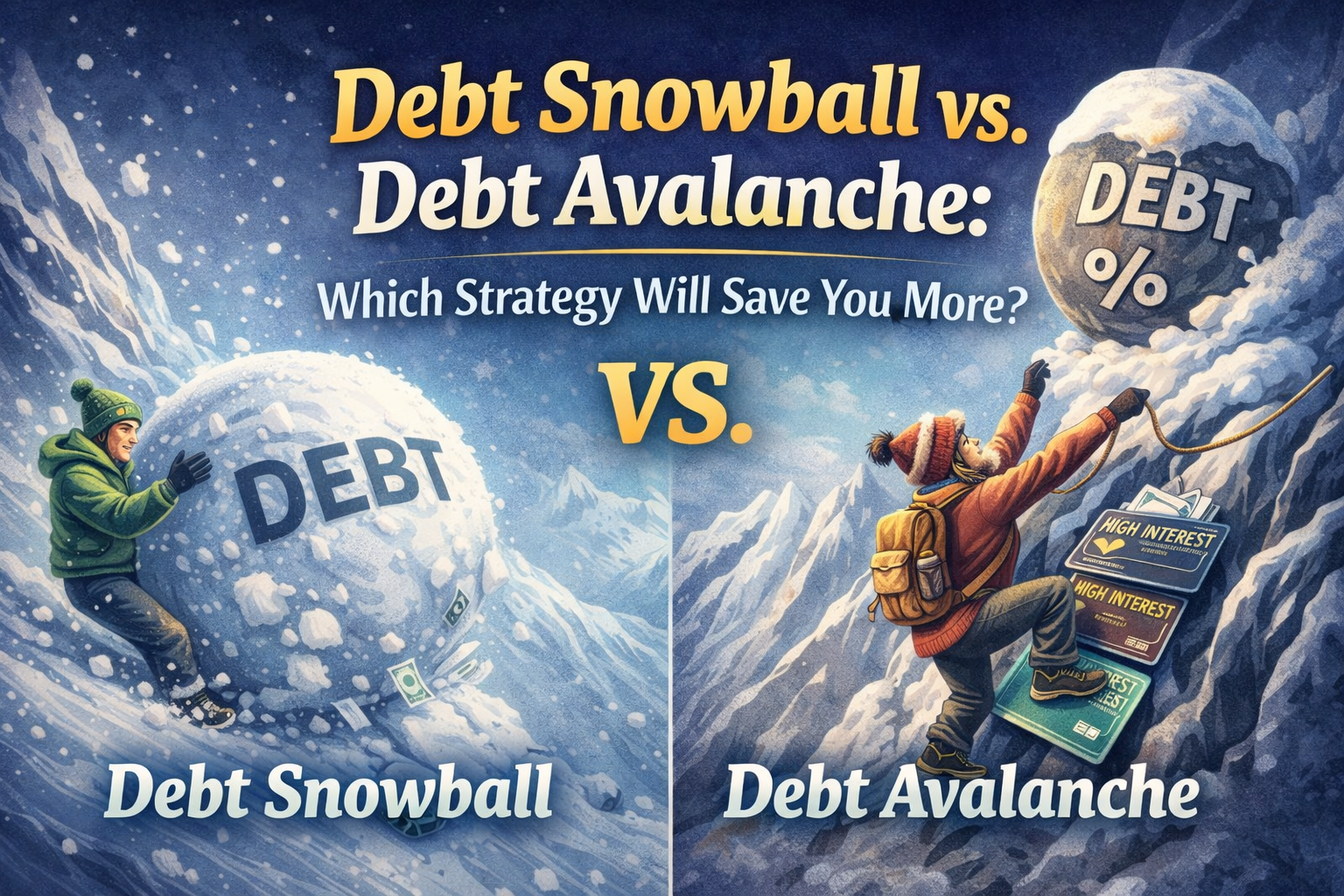
Tired of being in debt? Compare the two most popular debt-payoff methods to see which one fits your psychology and helps you become debt-free the fastest.
Intro
Debt can feel overwhelming, especially when you have multiple loans or credit cards to manage. Many people struggle to decide which debt to pay off first and how to stay motivated during the repayment process. Two popular strategies that help people eliminate debt faster are the Debt Snowball and the Debt Avalanche methods.
Both strategies provide a structured way to repay debt, but they work differently and produce different results. In this guide, we will break down Debt Snowball vs. Debt Avalanche, explain how each strategy works, and help you decide which one will save you more money.
Understanding Debt Repayment Strategies
Before comparing the two methods, it is important to understand why a structured strategy matters.
Without a clear plan, many people end up:
- Paying only minimum payments
- Accumulating more interest
- Feeling discouraged by slow progress
A repayment strategy helps you:
- Stay organized
- pay off debt faster
- reduce interest costs
- stay motivated during the process
The Debt Snowball and Debt Avalanche methods both focus on paying minimum payments on all debts while putting extra money toward one specific debt at a time.
Once one debt is cleared, the payment amount rolls into the next debt, accelerating the repayment process.
What is the Debt Snowball Method?
The Debt Snowball method focuses on paying off debts from smallest balance to largest balance, regardless of interest rate.
The main goal of this strategy is psychological motivation.
How the Debt Snowball Method Works
- List all your debts from smallest balance to largest balance
- Make minimum payments on all debts
- Put any extra money toward the smallest debt first
- Once the smallest debt is paid off, move to the next smallest
- Repeat the process until all debts are cleared
Example of the Debt Snowball Method
| Debt | Balance | Interest Rate |
|---|---|---|
| Credit Card A | $500 | 18% |
| Credit Card B | $2,000 | 20% |
| Personal Loan | $5,000 | 10% |
| Car Loan | $12,000 | 7% |
Using the Debt Snowball method, you would pay debts in this order:
- Credit Card A – $500
- Credit Card B – $2,000
- Personal Loan – $5,000
- Car Loan – $12,000
Each time you pay off a debt, the money you were paying toward it gets added to the next debt payment. This creates a snowball effect, where your payments grow larger over time.
Benefits of the Debt Snowball Method
The Debt Snowball strategy is extremely popular because of its psychological advantages.
1. Quick Wins Build Motivation
Paying off smaller debts quickly gives you a sense of achievement. These early wins help you stay committed to your repayment plan.
2. Easier to Stay Consistent
Seeing debts disappear one by one keeps people motivated and prevents them from giving up.
3. Simplifies Debt Management
Fewer debts mean fewer payments to track, which reduces financial stress.
Downsides of the Debt Snowball Method
Although the Debt Snowball method works well for motivation, it may not always be the most cost-effective strategy.
1. Higher Interest Costs
Because the strategy ignores interest rates, you may pay more interest overall.
2. Longer Repayment Time
In some cases, focusing on small balances instead of high-interest debts can slow down overall savings.
What is the Debt Avalanche Method?
The Debt Avalanche method focuses on paying off debts based on interest rates, starting with the highest interest first.
This strategy aims to minimize the total interest you pay over time.
How the Debt Avalanche Method Works
- List all debts by interest rate (highest to lowest)
- Pay minimum payments on all debts
- Put extra money toward the highest interest debt first
- Once it is paid off, move to the next highest interest debt
- Continue until all debts are cleared
Example of the Debt Avalanche Method
Using the same debt example:
| Debt | Balance | Interest Rate |
|---|---|---|
| Credit Card A | $500 | 18% |
| Credit Card B | $2,000 | 20% |
| Personal Loan | $5,000 | 10% |
| Car Loan | $12,000 | 7% |
With the Debt Avalanche method, the repayment order would be:
- Credit Card B – 20% interest
- Credit Card A – 18% interest
- Personal Loan – 10% interest
- Car Loan – 7% interest
This approach reduces the total interest you pay during the repayment process.
Benefits of the Debt Avalanche Method
1. Saves More Money
The Debt Avalanche strategy focuses on eliminating high-interest debt first, which reduces the total interest paid.
2. Faster Financial Efficiency
By attacking high-interest debt first, you reduce the overall cost of borrowing.
3. Mathematically Optimal Strategy
From a financial perspective, this method is the most efficient way to eliminate debt.
Downsides of the Debt Avalanche Method
1. Slower Emotional Rewards
If your highest-interest debt also has a large balance, it may take longer to see progress.
2. Motivation Can Drop
Some people lose motivation because the first debt may take months or years to clear.
Debt Snowball vs. Debt Avalanche: Key Differences
Understanding the difference between Debt Snowball vs. Debt Avalanche helps you choose the strategy that fits your financial behavior.
| Feature | Debt Snowball | Debt Avalanche |
|---|---|---|
| Priority | Smallest balance first | Highest interest rate first |
| Focus | Motivation | Saving money |
| Interest savings | Lower | Higher |
| Psychological boost | High | Moderate |
| Financial efficiency | Moderate | High |
Both methods are effective, but they serve different types of people.
Which Strategy Saves You More Money?
When comparing Debt Snowball vs. Debt Avalanche, the Debt Avalanche method usually saves more money because it reduces interest costs.
For example:
If you have $20,000 in credit card debt with high interest rates, using the Debt Avalanche strategy could save hundreds or even thousands of dollars in interest payments.
However, the difference depends on:
- Interest rates
- loan balances
- repayment timeline
Even though the Debt Avalanche method is mathematically better, the Debt Snowball method can still be more effective for people who need motivation.
If motivation helps you stay consistent, the Snowball method may help you eliminate debt faster overall.
How to Choose the Right Debt Repayment Strategy
Choosing between Debt Snowball vs. Debt Avalanche depends on your financial personality.
Choose the Debt Snowball Method if:
- You need motivation from quick wins
- you feel overwhelmed by multiple debts
- you want to see fast progress
Choose the Debt Avalanche Method if:
- You want to save the most money
- you are comfortable with long-term financial planning
- you are disciplined with your budget
Some people even combine both methods. They start with the Debt Snowball method to build momentum, then switch to the Debt Avalanche method to reduce interest costs.
Tips to Pay Off Debt Faster
Regardless of which strategy you choose, these tips can help accelerate your debt repayment journey.
Increase Your Monthly Payments
Paying more than the minimum reduces interest costs and shortens the repayment period.
Cut Unnecessary Expenses
Reducing discretionary spending can free up extra cash to pay down debt.
Use Windfalls Wisely
Tax refunds, bonuses, or unexpected income can be used to reduce debt faster.
Avoid New Debt
While paying off debt, avoid taking on new loans or credit card balances.
Final Thoughts
Choosing between Debt Snowball vs. Debt Avalanche depends on what motivates you and how you manage money.
The Debt Snowball method focuses on quick wins and motivation, helping people stay consistent with their repayment plan. On the other hand, the Debt Avalanche method focuses on interest rates and saves more money over time.
If your goal is to minimize interest and maximize savings, the Debt Avalanche strategy is the better financial choice. But if you need psychological motivation to stay committed, the Debt Snowball method can be incredibly effective.
The most important thing is to choose a strategy and stick with it. Consistency is the key to becoming debt-free and building a stronger financial future.
