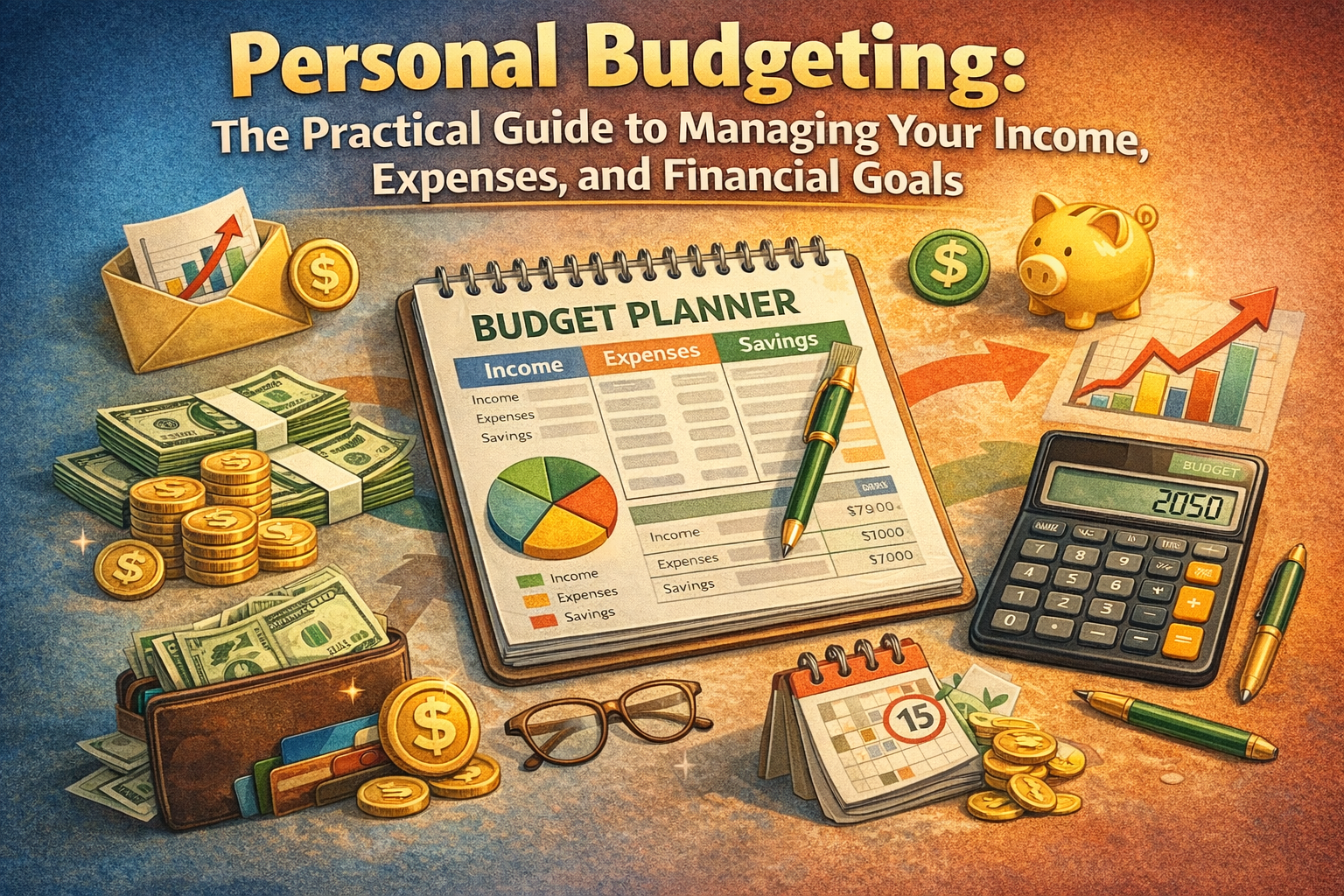
Learn how personal budgeting helps individuals and families manage income, control expenses, save money, and achieve financial goals with simple budgeting strategies.
Introduction
Most people don’t struggle with money because they earn too little. More often, the problem is not knowing exactly where the money goes every month.
You receive your salary, pay a few bills, spend on groceries, maybe enjoy a dinner out—and suddenly the month is over with very little left in your account.
That’s where personal budgeting becomes essential.
Personal budgeting is the process of planning how individuals or families manage their income and expenses so they can cover needs, control spending, and build savings over time.
It’s not about restricting every purchase or eliminating fun from life. A good budget simply gives your money direction.
When done properly, budgeting helps you:
- Reduce financial stress
- Avoid unnecessary debt
- Save for future goals
- Build long-term financial stability
The best part? Personal budgeting doesn’t require complicated financial tools or advanced knowledge. A simple plan and a bit of consistency can make a huge difference.
Let’s explore how it works and how you can create a budget that actually fits your life.
What Is Personal Budgeting?
At its core, personal budgeting is a financial plan that outlines:
- How much money you earn
- How much you spend
- Where your money goes each month
The goal is simple: make sure your expenses don’t exceed your income while still allowing room for savings and financial goals.
A typical household budget includes categories like:
- Housing (rent or mortgage)
- Groceries
- Utilities
- Transportation
- Insurance
- Entertainment
- Savings and investments
Budgeting helps you visualize your finances and make smarter decisions about spending.
For a broader overview of how budgeting works, you can explore the concept on Wikipedia:
https://en.wikipedia.org/wiki/Budget
Why Personal Budgeting Is So Important
Many people avoid budgeting because they believe it limits their freedom. In reality, the opposite is true.
A well-designed budget actually gives you more control and confidence over your finances.
Here are some of the biggest benefits.
1. Better Control Over Spending
Without a budget, it’s easy to underestimate how much you spend.
Small purchases like coffee, online subscriptions, or takeaway meals quietly add up.
Budgeting helps you track these expenses and identify areas where you can cut back if needed.
2. Helps You Build Savings
Saving money rarely happens automatically.
Budgeting allows you to allocate a specific portion of your income toward:
- Emergency funds
- Retirement savings
- Investment accounts
- Future purchases
This approach makes saving consistent rather than occasional.
3. Reduces Financial Stress
Financial uncertainty can cause significant stress.
When you know exactly how much money you have and where it’s going, your finances feel far more manageable.
A clear budget removes many financial surprises.
4. Helps Achieve Financial Goals
Budgeting makes long-term goals realistic.
Whether you want to:
- Buy a house
- Pay off debt
- Start investing
- Build a retirement fund
A budget allows you to plan step by step.
The Key Components of a Personal Budget
Every effective budget includes three basic elements.
1. Income
Income refers to the total money you receive each month.
This may include:
- Salary or wages
- Freelance income
- Business earnings
- Investment income
- Rental income
Your net income (after taxes) is usually the best number to work with.
2. Fixed Expenses
Fixed expenses are costs that stay relatively stable each month.
Examples include:
- Rent or mortgage payments
- Loan repayments
- Insurance premiums
- Internet and subscription services
Because these costs rarely change, they are easy to plan for.
3. Variable Expenses
Variable expenses fluctuate from month to month.
These include:
- Groceries
- Dining out
- Shopping
- Entertainment
- Transportation
Tracking these expenses is where budgeting becomes most useful.
Popular Personal Budgeting Methods
There isn’t just one way to budget. Different strategies work for different lifestyles.
Here are a few popular approaches.
The 50/30/20 Budget Rule
The 50/30/20 rule is one of the simplest budgeting frameworks.
Your income is divided into three categories:
- 50% for needs – housing, food, utilities
- 30% for wants – entertainment, dining, hobbies
- 20% for savings and debt repayment
This method keeps budgeting simple while encouraging consistent saving.
You can learn more about this approach through financial education resources like the Consumer Financial Protection Bureau:
https://www.consumerfinance.gov/consumer-tools/budgeting/
Zero-Based Budgeting
Zero-based budgeting assigns every dollar of income a specific job.
Income minus expenses should equal zero.
Example:
Income: ₹60,000
Allocated to:
- Rent
- Groceries
- Transport
- Savings
- Investments
- Entertainment
Every rupee has a purpose.
This approach gives extremely detailed control over finances.
Envelope Budgeting Method
This method involves dividing spending money into physical or digital “envelopes.”
Each envelope represents a category like:
- Groceries
- Dining out
- Entertainment
Once the envelope is empty, spending in that category stops for the month.
Many budgeting apps now replicate this system digitally.
Real-Life Example of Personal Budgeting
Let’s imagine a household with a monthly income of ₹80,000.
A simple budget might look like this:
Needs (50%) – ₹40,000
- Rent: ₹20,000
- Groceries: ₹10,000
- Utilities: ₹5,000
- Transportation: ₹5,000
Wants (30%) – ₹24,000
- Dining out
- Entertainment
- Shopping
- Travel savings
Savings and Investments (20%) – ₹16,000
- Emergency fund
- Retirement investments
- Mutual funds
This structure ensures essential expenses are covered while still building savings.
Tools That Make Budgeting Easier
Budgeting used to require notebooks and spreadsheets.
Today, several tools simplify the process.
Common options include:
- Budget tracking apps
- Spreadsheet templates
- Banking apps with spending insights
- Expense tracking tools
These tools automatically categorize transactions, making it easier to monitor spending habits.
Common Personal Budgeting Mistakes
Even with good intentions, budgeting can fail if certain mistakes occur.
Some common ones include:
Setting Unrealistic Limits
Cutting entertainment spending to zero rarely works long-term.
Budgets should allow flexibility.
Ignoring Small Expenses
Daily purchases can slowly drain your finances.
Tracking them is essential.
Forgetting Irregular Expenses
Costs like annual insurance or car repairs often get overlooked.
Include them in your financial plan.
Not Updating the Budget
Income and expenses change over time.
Budgets should be reviewed monthly to stay accurate.
How Personal Budgeting Builds Long-Term Wealth
Budgeting is often associated with controlling spending, but its biggest benefit is building financial freedom over time.
When you consistently save and invest even a small portion of income, the effects compound.
Over several years, budgeting helps you:
- Build emergency funds
- Avoid high-interest debt
- Invest for retirement
- Achieve major financial goals
It creates a financial foundation that grows stronger with time.
Conclusion
Personal budgeting isn’t about restriction—it’s about clarity.
When you understand exactly how much money you earn, where it goes, and how much you can save, your finances become far easier to manage.
A simple budget allows individuals and families to control spending, reduce stress, and work toward meaningful financial goals.
Start small if needed. Track your expenses, set realistic categories, and adjust your plan over time.
With consistency, personal budgeting can transform the way you handle money and build long-term financial stability.
Frequently Asked Questions (FAQ)
What is personal budgeting?
Personal budgeting is the process of planning how an individual or family manages their income and expenses to control spending and achieve financial goals.
Why is personal budgeting important?
Budgeting helps track expenses, avoid overspending, build savings, and reduce financial stress by providing a clear financial plan.
What is the 50/30/20 budgeting rule?
The 50/30/20 rule divides income into three parts: 50% for needs, 30% for wants, and 20% for savings and debt repayment.
How do beginners start budgeting?
Beginners can start by tracking monthly income, listing expenses, categorizing spending, and allocating money toward savings and financial goals.
What tools help with budgeting?
Budgeting apps, spreadsheets, and banking tools that track expenses automatically can make personal budgeting easier and more accurate.
How often should a budget be reviewed?
A budget should ideally be reviewed every month to adjust for changes in income, expenses, or financial priorities.
