
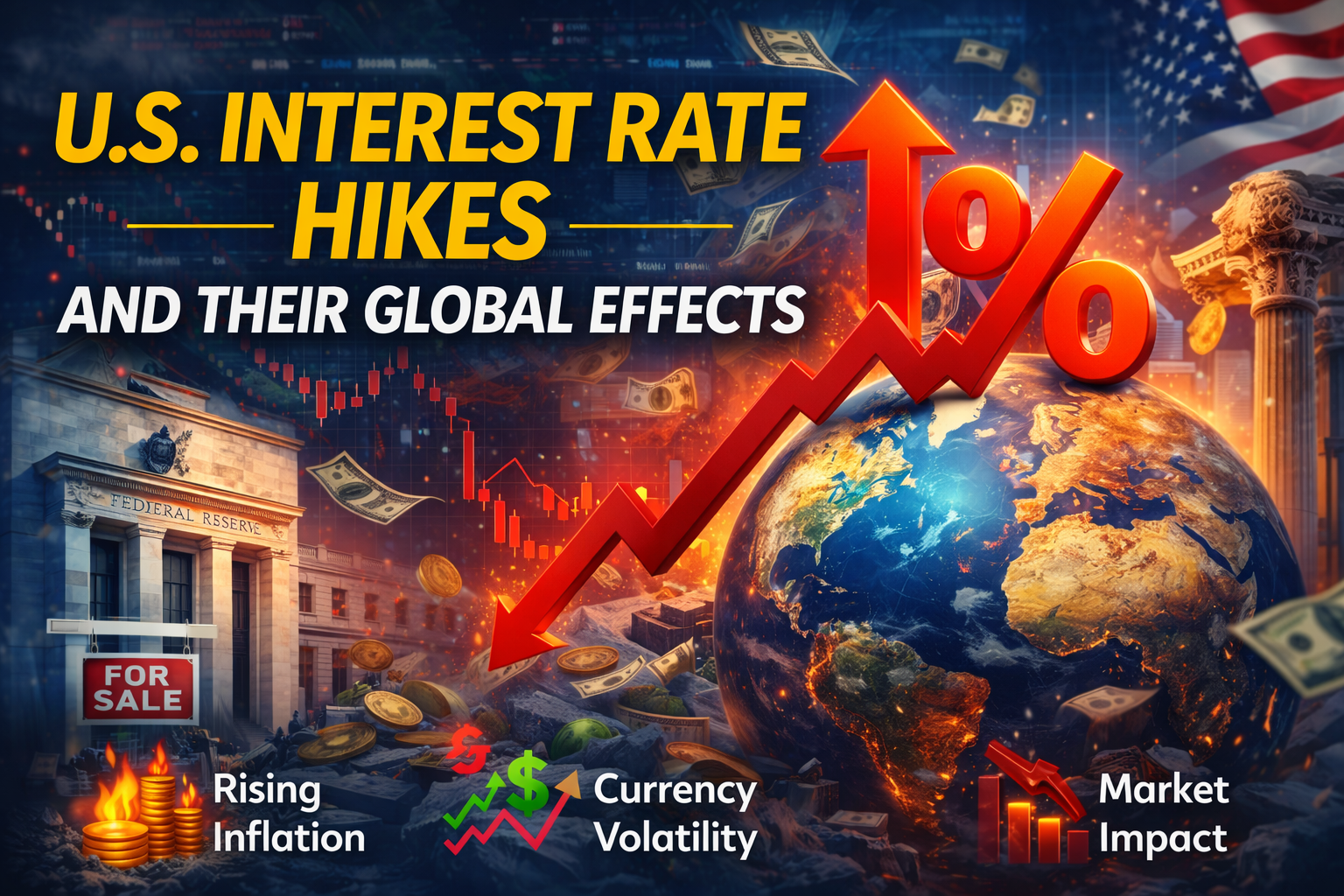
Learn how interest rate changes in the United States influence the global economy. Discover how rising interest rate policies affect inflation, currencies, investments, and international markets.
U.S. Interest Rate Changes and Their Global Effects
The interest rate decisions made in the United States play a major role in shaping the global economy. Because the U.S. economy is the largest in the world and the U.S. dollar is the dominant global currency, any change in interest rate policy can influence financial markets across continents.
When the United States raises or lowers its interest rate, the effects are felt not only domestically but also internationally. Global investors, governments, and businesses closely watch U.S. interest rate decisions because they impact borrowing costs, investment flows, and currency values worldwide.
Understanding how interest rate policies work and their global consequences is essential for anyone interested in finance, economics, or international markets.
Why Interest Rate Decisions Matter
An interest rate represents the cost of borrowing money. Central banks adjust the interest rate to manage inflation, economic growth, and employment levels.
In the United States, the interest rate is set by the Federal Reserve through monetary policy decisions.
When inflation rises or the economy grows too quickly, the central bank may increase the interest rate to slow spending. When economic growth weakens, it may reduce the interest rate to encourage borrowing and investment.
You can learn more about U.S. monetary policy here:
https://www.federalreserve.gov/monetarypolicy.htm
Because the United States plays a central role in global finance, changes in its interest rate influence economies around the world.
How U.S. Interest Rate Policies Affect the Global Economy
Changes in the U.S. interest rate have far-reaching consequences that extend beyond national borders.
Interest Rate Changes and Global Investment Flows
One of the most immediate effects of a rising interest rate in the United States is the movement of global capital.
When the U.S. increases its interest rate, American financial assets such as bonds become more attractive to investors. As a result, global investors often shift their money toward U.S. markets.
This movement of capital can reduce investment in emerging economies and other international markets. As funds flow into the United States due to higher interest rate returns, other countries may experience slower investment growth.
Interest Rate Impact on Global Currency Markets
Changes in the U.S. interest rate also affect currency exchange rates.
When the interest rate rises in the United States, demand for the U.S. dollar usually increases. Investors convert their currencies into dollars to take advantage of higher returns in U.S. financial assets.
This often strengthens the U.S. dollar compared to other currencies.
According to data from the International Monetary Fund, shifts in the U.S. interest rate can lead to currency fluctuations in emerging markets.
Learn more about global economic analysis here:
https://www.imf.org/en/Publications
A stronger dollar can make imports cheaper for Americans but can create financial pressure for countries that rely on dollar-based debt.
Interest Rate Effects on Global Debt
Another major impact of U.S. interest rate increases is related to global debt.
Many governments and corporations around the world borrow money in U.S. dollars. When the interest rate rises in the United States, borrowing costs for dollar-denominated debt also increase.
This means countries and companies may have to pay more interest on their loans. Higher interest rate payments can strain national budgets and corporate finances.
Organizations such as the World Bank often monitor the global risks associated with rising interest rate policies.
More information about global financial risks can be found here:
https://www.worldbank.org/en/publication/global-economic-prospects
Interest Rate Changes and Global Stock Markets
Financial markets around the world respond quickly to U.S. interest rate decisions.
When the interest rate increases, borrowing costs for companies rise. Higher borrowing costs can reduce corporate profits, which may cause stock markets to decline.
Investors often adjust their portfolios based on expected interest rate trends. For example:
- Higher interest rate levels may benefit banks and financial institutions.
- Growth-oriented technology companies may face pressure due to higher borrowing costs.
Global stock markets closely monitor statements and policy decisions from the Federal Reserve because these decisions influence investor sentiment worldwide.
Interest Rate Impact on Emerging Economies
Emerging economies are particularly sensitive to changes in the U.S. interest rate.
When the United States raises its interest rate, investors may move capital away from developing countries and into American markets. This capital outflow can weaken local currencies and reduce economic stability.
For example, countries with high levels of foreign debt may struggle when the interest rate rises in the United States because their repayment costs increase.
As a result, policymakers in emerging economies often adjust their own interest rate policies in response to changes made by the U.S. central bank.
Interest Rate Policy and Inflation Control
The main purpose of adjusting the interest rate in the United States is to control inflation.
When inflation becomes too high, raising the interest rate helps reduce consumer spending and borrowing. This slows down economic activity and helps stabilize prices.
However, higher interest rate levels can also slow economic growth globally. Businesses may delay investments and consumers may reduce spending due to higher borrowing costs.
Balancing inflation control with economic growth is one of the most challenging tasks for central banks managing interest rate policies.
Future Outlook for Interest Rate Policies
The future direction of the U.S. interest rate will depend on economic conditions such as inflation, employment, and global financial stability.
Economists closely monitor economic indicators to predict how the interest rate might change in the future.
If inflation remains high, central banks may continue raising the interest rate to maintain price stability. On the other hand, if economic growth slows significantly, policymakers may reduce the interest rate to stimulate the economy.
Because of the global influence of the United States, future interest rate decisions will continue to shape international financial markets.
Conclusion
Changes in the U.S. interest rate have significant consequences for the global economy. From influencing international investment flows to affecting currency markets and global debt, interest rate policies play a central role in the modern financial system.
As the world’s largest economy, the United States sets financial trends that ripple through markets worldwide. Understanding how interest rate changes impact global economies helps investors, businesses, and policymakers make informed decisions.
As global markets continue to evolve, monitoring U.S. interest rate policies will remain essential for understanding the direction of the global economy.
Discover powerful investment strategies to grow wealth through stocks, bonds, real estate, and diversified portfolios. Learn smart investing for long-term financial success.
